
S2021H
S2021H
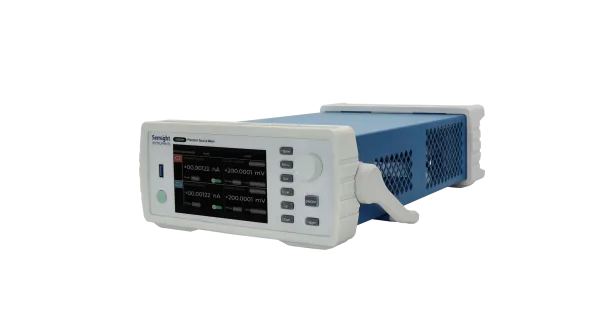
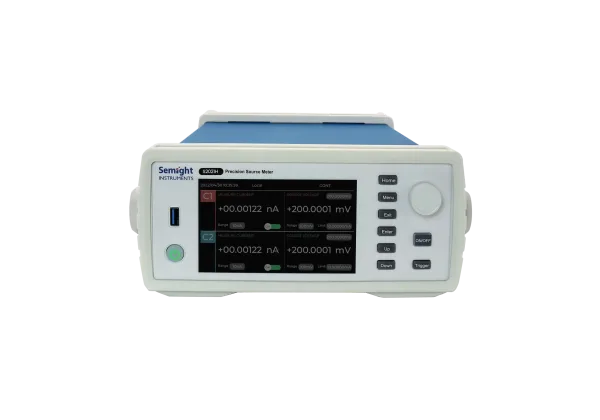
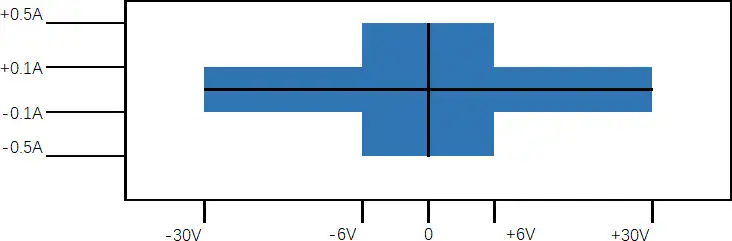
The S2021H – Semight Instruments 4-Channel Precision Source Meter is a compact, cost-effective 4-channel benchtop power/measuring unit (SMU) capable of simultaneously outputting and measuring voltage and current, capable of delivering a maximum ±30V, ±500 mA (DC/pulse) output and superior color LCD graphical user interface (GUI).
Features

High Range
Range: ± 30 V, ± 500 mA (DC/pulse)

High Resolution
The minimum measurement resolution can reach 100 pA/60 μV

High Sampling Rate
Supports up to 500k ADC sampling rate
Threshold Trigger
Hardware high-speed IO, capable of threshold triggering, enabling efficient interaction between output measurement values and user systems
Functions and Advantages
I-V Output Capability
Voltage Source Specifications
| Voltage Accuracy | ||||
| Range | Programming Resolution | Accuracy (1 year)
± (% reading+offset)[1] |
Typical Noise (RMS)
0.1 Hz-10 Hz |
|
| ± 30 V[3] | 1 mV | 0.03%+4 mV | 1 mV | |
| ± 6 V | 200 μV | 0.03%+1 mV | 100 μV | |
| Temperature Coefficient | ± (0.15 x accuracy)/℃ (0 ℃ -18 ℃, 28 ℃ -50 ℃) | |||
| Channel[2] | CH1 to CH4 | |||
| Output Power | 3W per channel and 6W total | |||
| Overshoot | < ±0.1% (typical, normal, step is 10% to 90% range, full range, resistive load) | |||
| Noise 10Hz-20MHz | 6V voltage source, 0.5A resistive load,< 3 mVrms | |||
[1] Accuracy calculation example: For testing the accuracy of a 6V range with a 1V output, the tolerance is

[2] All channel outputs are electrically isolated from ground, but the outputs of channels CH1-CH4 share a common ground (LO)
[3] This instrument has potentially dangerous high voltage (±31.5 V) output to the HI / Sense HI / Guard terminals. To prevent electric shock, relevant precautions must be taken before powering on. Safety precautions. Do not connect the Guard terminal to any output, including shorting it to chassis ground or output LO, as this will damage the instrument.
Current Source Specifications
| Current Accuracy | ||||
| Range | Programming Resolution | Accuracy (1 year)
± (% reading+offset) |
Typical Noise (RMS)
0.1 Hz-10 Hz |
|
| ± 500 mA[4] | 20 μA | 0.05%+100 μA+ Vo * 25 μA | 10 μA | |
| ± 100 mA | 4 μA | 0.05%+10 μA+ Vo * 5 μA | 1 μA | |
| ± 10 mA | 400 nA | 0.05%+5 μA+ Vo * 500 nA | 100 nA | |
| ± 1 mA | 40 nA | 0.05%+500nA+ Vo * 50 nA | 10 nA | |
| ± 100 μ A | 4 nA | 0.05%+50 nA+ Vo * 5 nA | 1 nA | |
| ± 10 μ A | 400 pA | 0.05%+20 nA+ Vo * 500 pA | 150 pA | |
| Temperature Coefficient | ± (0.15 x accuracy)/℃ (0 ℃ -18 ℃, 28 ℃ -50 ℃) | |||
| Channel[5] | CH1 to CH4 | |||
| Output Power | 3W per channel and 6W total | |||
| Overshoot | < ± 0.1% (typical, normal, step is 10% to 90% range, full range, resistive load) | |||
[4] 500mA range is available only for 6V voltage range
[5] Channels are isolated from earth ground but share a common LO
Voltage Measurement Specifications
| Voltage measurement Accuracy | |||
| Range | Measurement Resolution | Accuracy (1 year)
± (% reading+offset) |
|
| ± 30 V | 300 μV | 0.03%+4 mV | |
| ± 6 V | 60 μV | 0.03%+1 mV | |
| Temperature Coefficient | ± (0.15 x accuracy)/℃ (0 ℃ -18 ℃, 28 ℃ -50 ℃) | ||
Current Measurement Specifications
| Current Measurement Accuracy | |||
| Range | Measurement Resolution | Accuracy (1 year)
± (% reading+offset) |
|
| ± 500 mA[6] | 10 μA | 0.05%+100 μA+ Vo * 25 μA | |
| ± 100 mA | 1 μA | 0.05%+10 μA+ Vo * 5 μA | |
| ± 10 mA | 100 nA | 0.05%+5 μA+ Vo * 500 nA | |
| ± 1 mA | 10 nA | 0.05%+500 nA+ Vo * 50 nA | |
| ± 100 μA | 1 nA | 0.05%+50 nA+ Vo * 5 nA | |
| ± 10 μA | 100 pA | 0.05%+20 nA+ Vo * 500 pA | |
| Temperature Coefficient | ± (0.15 x accuracy)/℃ (0 ℃ -18 ℃, 28 ℃ -50 ℃) | ||
[6] 500mA range is available only for 6V voltage range
Typical Output Setting Time
| Source | Range | Output Setting Time[7] | Condition | ||
| Fast [8] | Normal | Slow | |||
| Voltage | 30 V | < 400 μs | < 1.5ms | < 2.8 ms | Time required to reach within 0.1 % of final value at open load condition. Step is 10 % to 90 % range |
| 6 V | <250 μs | <780 μs | <2.8 ms | ||
| Current | ± 500 mA | <50 μs | <330 μs | <2.5 ms | Time required to reach within 0.1 % of final value at short condition. Step is 10 % to 90 % range |
| ±100 mA | <50 μs | <270 μs | <2.5 ms | ||
| ±10 mA | <50 μs | <270 μs | <2.5 ms | ||
| ±1 mA | <100 μs | <290 μs | <2.5 ms | ||
| ±100 μA | <150 μs | <5 ms | <2.5 ms | ||
| ±10 μA | <250 μs | <3 ms | <2.5 ms | ||
[7] Output transition rate: Three modes of Fast, Normal, and Slow are available, allowing users to adjust according to load characteristics to achieve appropriate setup time or stability. This feature only supports switching the output transition rate when OUTPUT is set to OFF
[8] The Fast mode may produce a large overshoot under different ranges or load conditions. For overshoot-sensitive devices, it is recommended to use normal or Slow mode. mode