


MSO3124V Mixed Signal Oscilloscope
MSO3124V – Acute 6-in-1 Mixed Signal Oscilloscope
6-in-1 Instruments:
DAQ, DSO, DVM, Frequency Counter, Logic Analyzer, Protocol Analyzer
- PC-based, USB3.0 interface / powered (Type-A / Type-C)
- Total Memory:4 Gb
- Data Logger (HDD / SSD Storage)
- DSO:4 Channels, 1 GS/s S/R, 200 MHz bandwidth
- Digital Voltmeter :3 digits
- Frequency Counter:5 digits
- Logic / Protocol Analyzer:16 Channels, 2 GS/s Timing Analysis, 250 MHz State Analysis
The Acute MSO3124V is a powerful 6-in-1 channel mixed signal oscilloscope that integrates an oscilloscope, logic analyzer, protocol analyzer, data collector, digital multimeter, and frequency counter in one device. Capable of simultaneously capturing analog and digital signals, it is well-suited for a wide range of applications—from waveform analysis to system data monitoring. With 4 analog channels, a 1 GS/s sampling rate, 200 MHz bandwidth, and 128Mpts memory per channel, the MSO3124V also includes a built-in 3-digit digital multimeter and 5-digit frequency counter. Supporting both logic and protocol analyzer modes, this Acute device excels in signal and bus analysis. Its 16-bit high resolution, oscilloscope stacking, and compatibility with critical power management protocols like Intel SVID and AMD SVI3 make it ideal for advanced validation and embedded system debugging.
MSO3124V is a versatile 6-in-1 instrument that offers oscilloscope, logic analyzer, protocol analyzer, data collector, digital multimeter, and frequency counter functionalities. It can simultaneously measure and display both analog and digital signals. Due to its combination of multiple measurement and analysis capabilities, it is suitable for various application fields, from data collection to waveform analysis, allowing for efficient and accurate tasks.
MSO3124V oscilloscope features 4 channels, a 1 GS/s sampling rate, and a 200 MHz bandwidth, with a record length of 128Mpts for each channel. Additionally, it includes a 3-digit digital multimeter and a 5-digit frequency counter. The MSO3124V not only supports oscilloscope mode but also includes logic analyzer mode and protocol analyzer mode, making it suitable for different signal and bus analysis requirements.
In addition to its 16-bit high-resolution and oscilloscope stacking features, the MSO3124V also supports critical power management-related signals, such as Intel”s SVID and AMD”s SVI3. This makes the MSO3124V an ideal choice for handling modern power management and electrical characteristics verification.
DSO Functions:
Protocol Electrical Validation
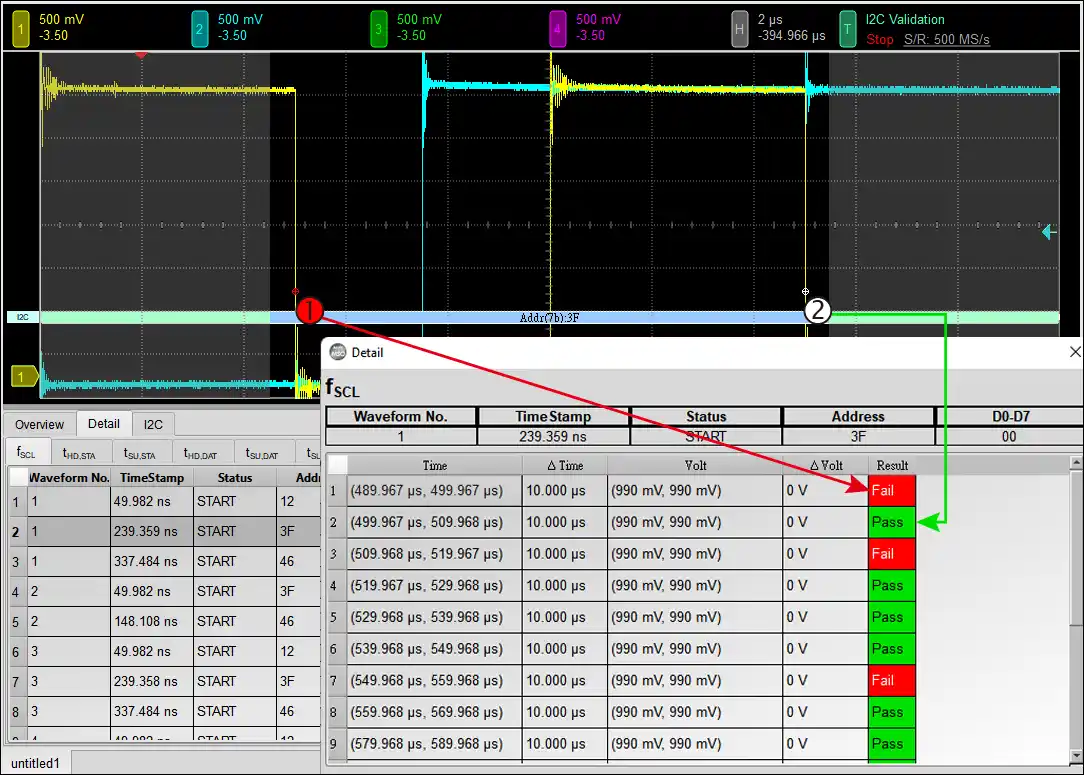
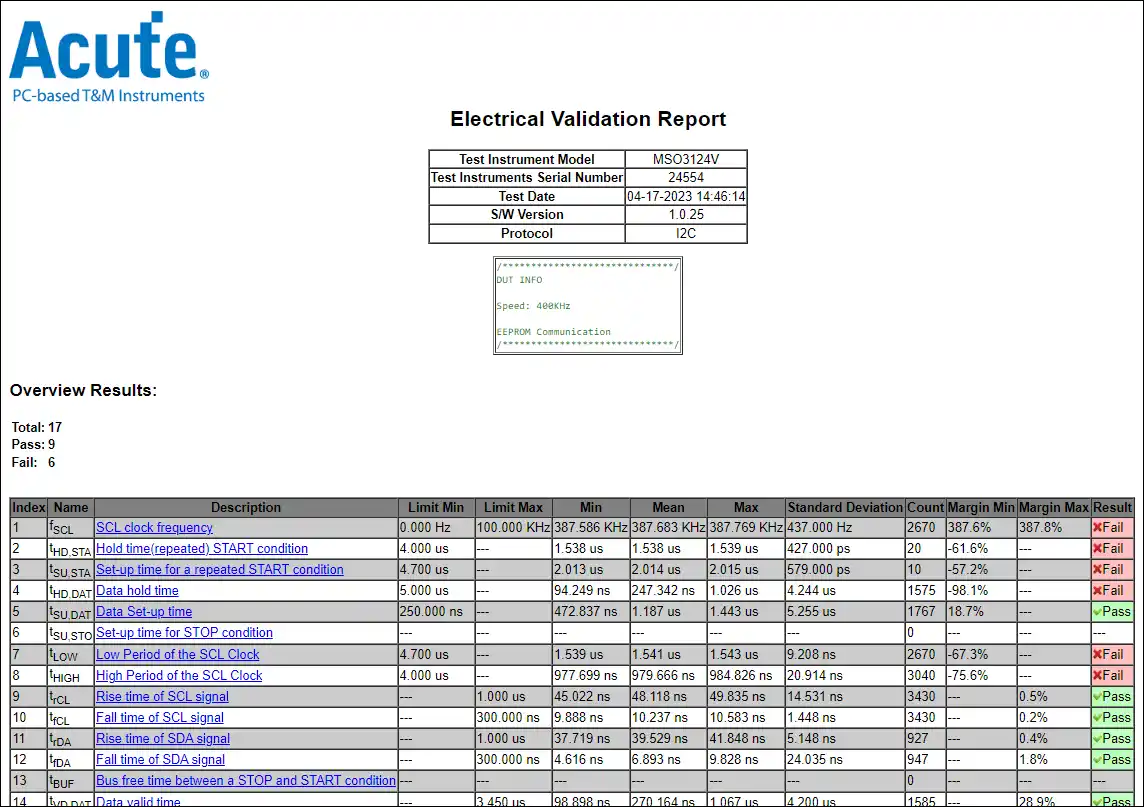
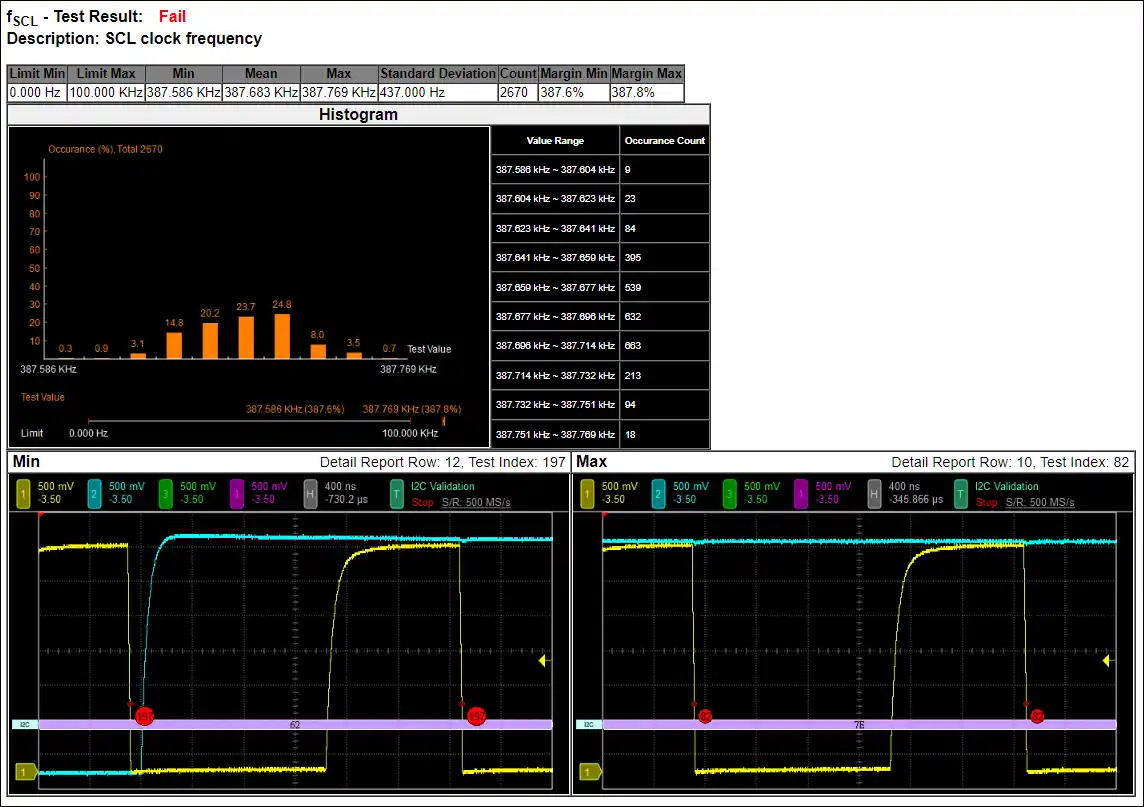
This function will allow you to set up a decode & electrical validation parameter such as voltage, frequency, timing and etc. Then, the software will show all the testing results including the waveform, reference point and it can also create the testing report automatically.
In general settings, you can specify important parameters such as the signal source, operating voltage, and speed, among others. Additionally, decoding settings aid in a more in-depth signal analysis, and electrical verification allows for numerical range setting of verification items like voltage, timing, and frequency. On the software side, compliance with the specified parameters can be determined, ensuring the accuracy and stability of electronic devices.
Software Test Report
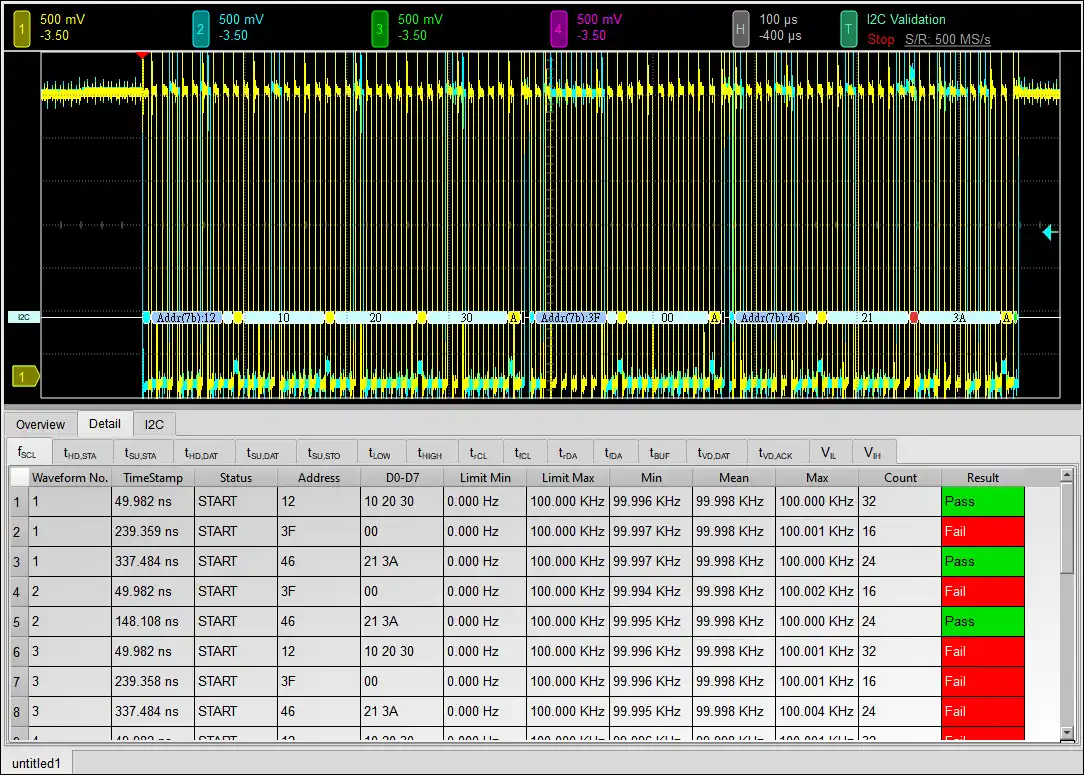
Reference Point Dialog & Waveform
HTML Report
Detailed Contents of the HTML Report
Multiple Devices Stack Mode
Support DSO stack mode, up to 4 devices (16 channels) can be stacked together in the same time.
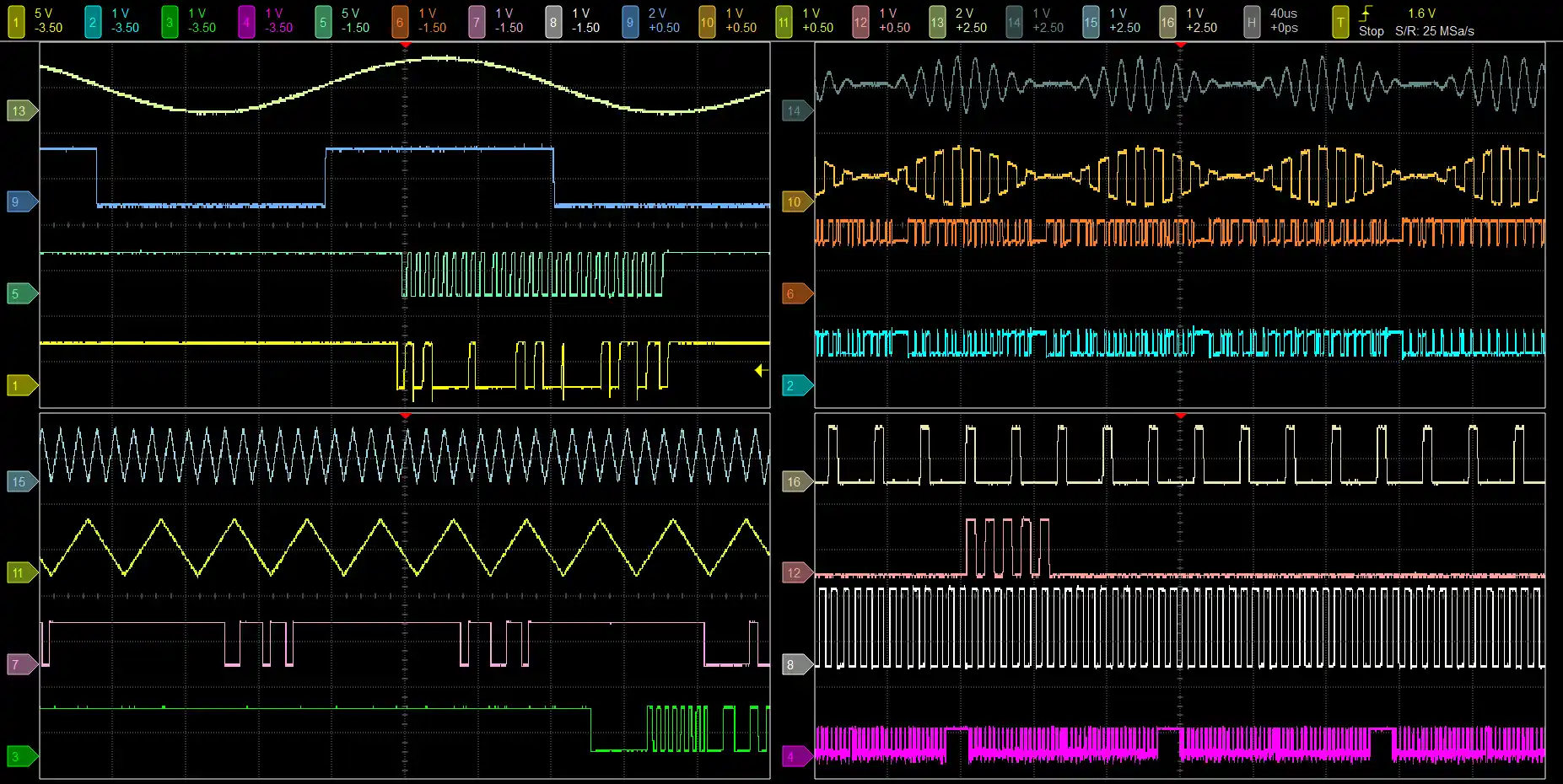
Protocol Decode & Trigger Function
Provides, CAN/CAN-FD, I²C, LIN, MIPI I3C 1.1, ProfiBus, SPI, UART(RS232), USB1.1,… protocol decode and trigger function, which is able to trigger and decode on the specified Command/Address/Data…
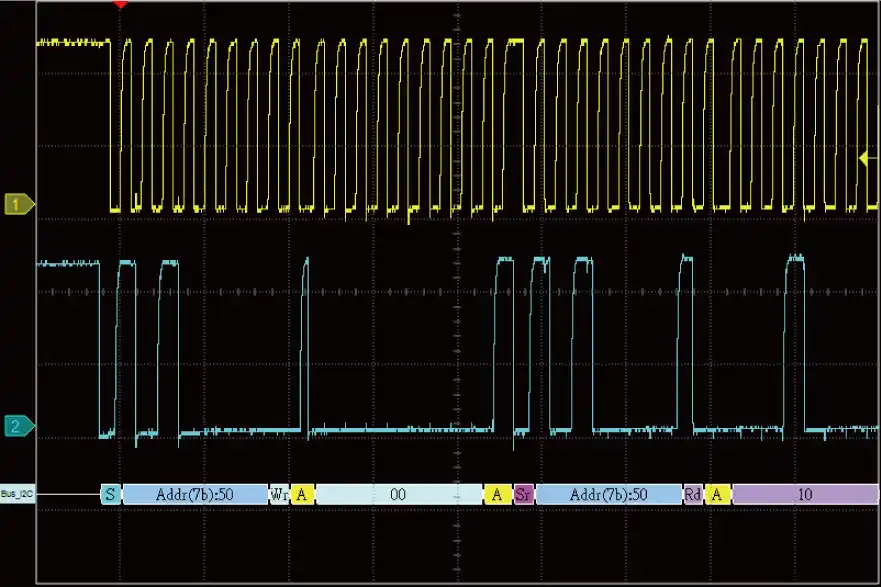
Decode the I2C waveforms
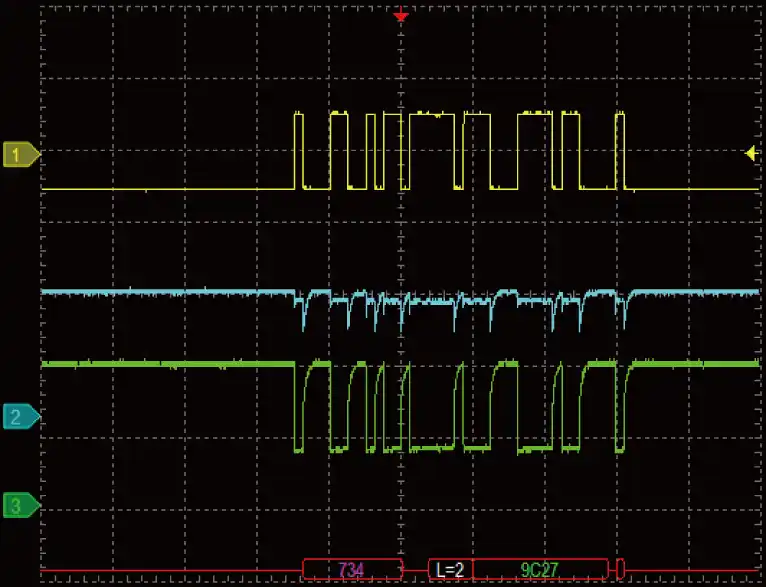
Decode the differential CAN signals with a differential probe. (CH1: Differential Probe, CH2: CAN H, CH3: CAN L)
※ Supports CAN-FD, CAN2.0
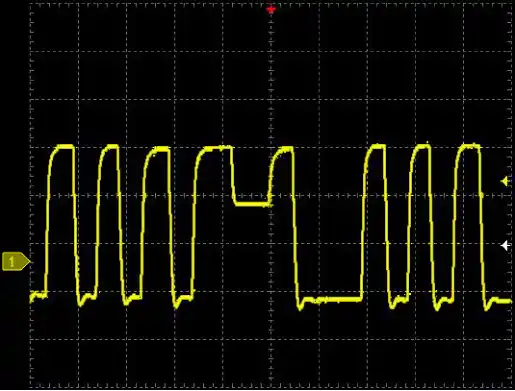
Runt Trigger – Positive Runt
Use 2 voltage thresholds and pulse width to trigger on either/ ±runt signals.
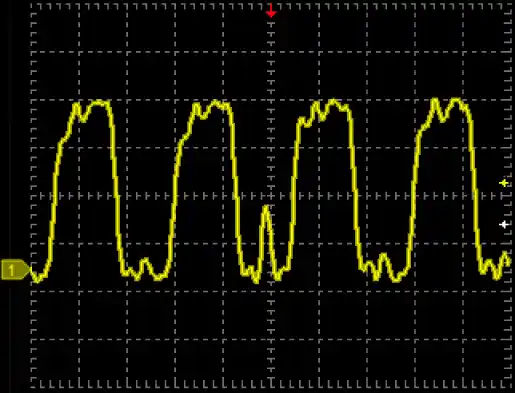
Runt Trigger – Negative Runt
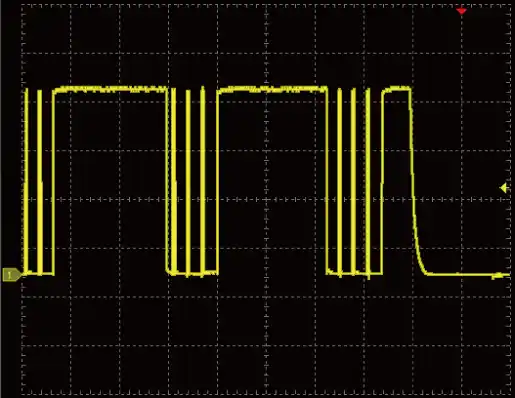
Timeout Trigger
Trigger when no pulse is detected within a specified time, range from 2ns to 50s.
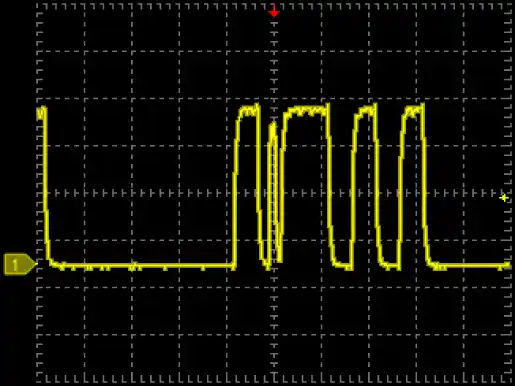
Width Trigger
Pulse width range from 8ns to 50s.
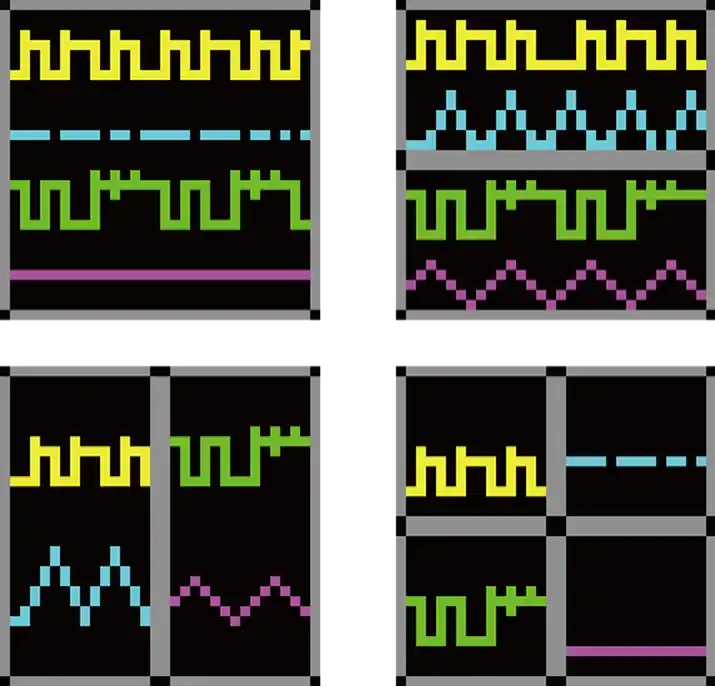
Multiple Windows
Multiple Window feature provides 4 display types (1×1, 2×1, 1×2, 2×2), which could displays 16 channels in maximum 4 different windows, provides clear waveform readability without lower the vertical resolution.
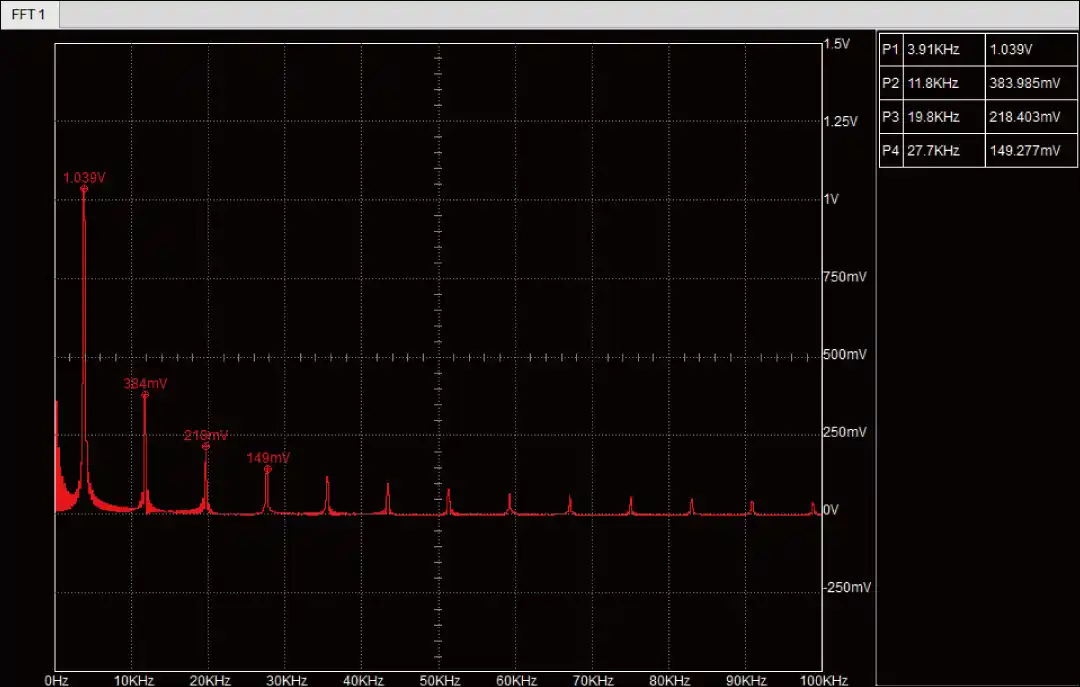
Spectrum analysis (Fast Fourier transform, FFT)
Apply FFT to the selected channel.
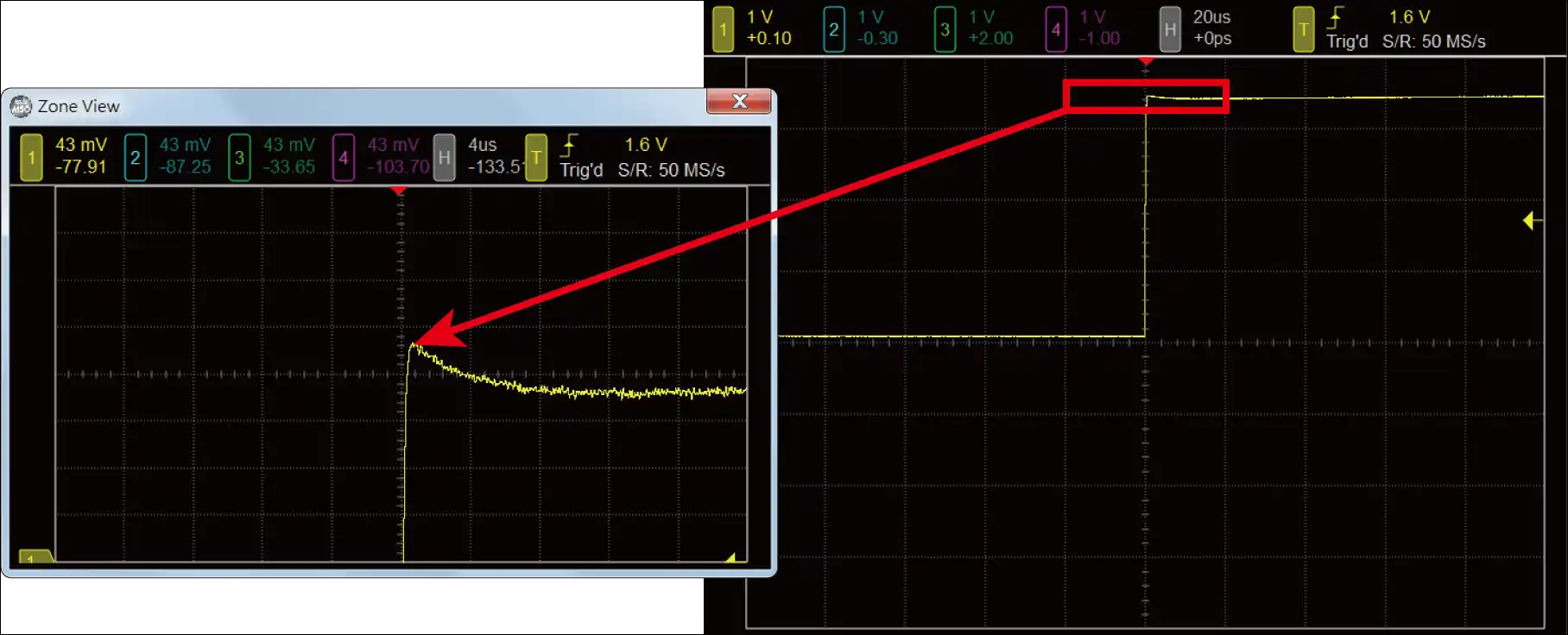
Vertical Offset & Zone View
Voltage division from 2mV/Div – 10V/Div combined with the channel independent Vertical Offset settings, which can be used for glitch measurement and analysis on DC power, and observing the ripple and overshooting voltage on DC offseted voltage. It is also possible to use 16Bit high vertical resolution mode (TS3124H/V) with the Zone View feature to observe the DC voltage and ripple signal together in the same time.
Digital Voltmeter, DVM
Provides voltage root-mean-square, voltage average and frequency counter function for the selected channel.
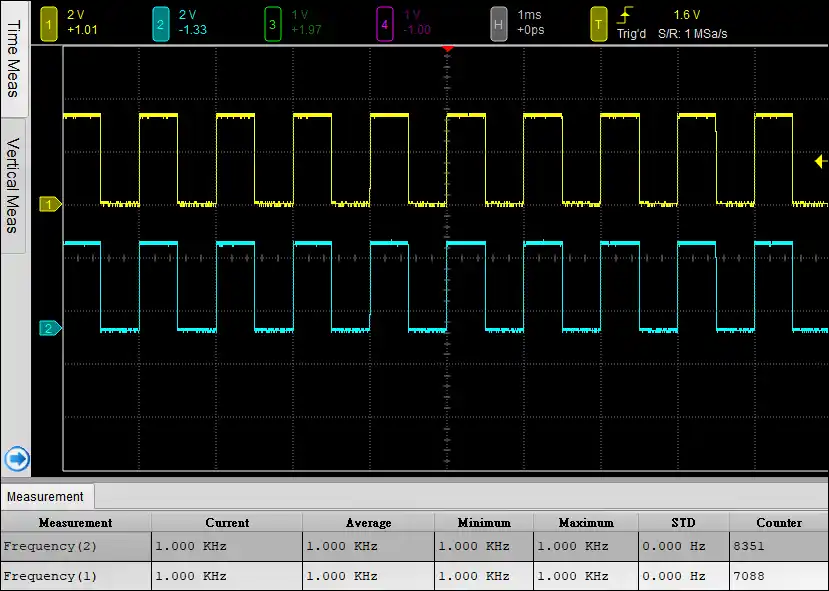
Measure 1 KHz, 2.5 Vpp square waveforms by the measurement function.
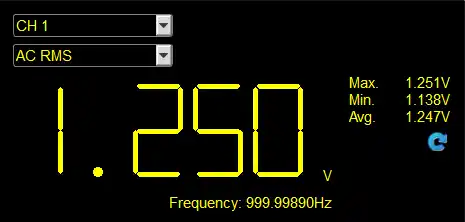
Measure 1 KHz, 2.5 Vpp square waveforms by the DVM function.
Measurement
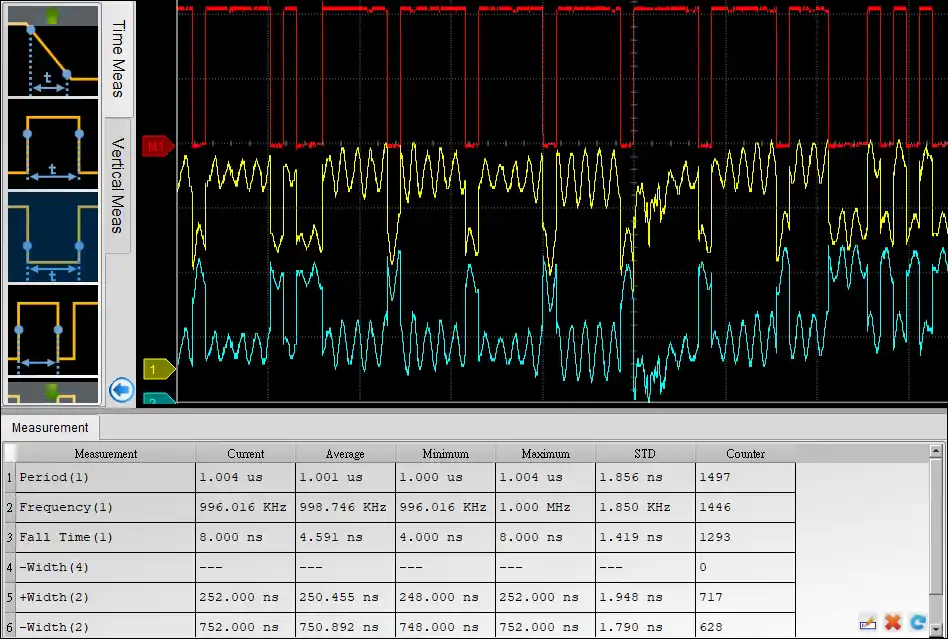
More than 20 types of waveform measurements with customized threshold settings features, provides real-time update for vertical, time and channel to channel timing measurements with statistic features.
- Time:Frequency, Period, ±Duty, ±Period, Rise/Fall Time, Delay, Phase
- Vertical:VMax, VMin, VHigh, VLow, Vpp, VAmp, VMid, VMean, VRMS, ±Overshoot, Rise/Fall Preshoot
- Counter:Edge Count, ±Pulse Count
- Math:Add, Subtract, Multiple, Divide, XY, Absolute, Square Root, LogA, LnA, Exponential, Integral
Logic Analyzer (LA) Mode
- Capture digital waveforms and support bus decodes. Able to stack with a DSO to form as an MSO.
- Provides multiple storage modes, users could select to have long time recording or precision acquisition.
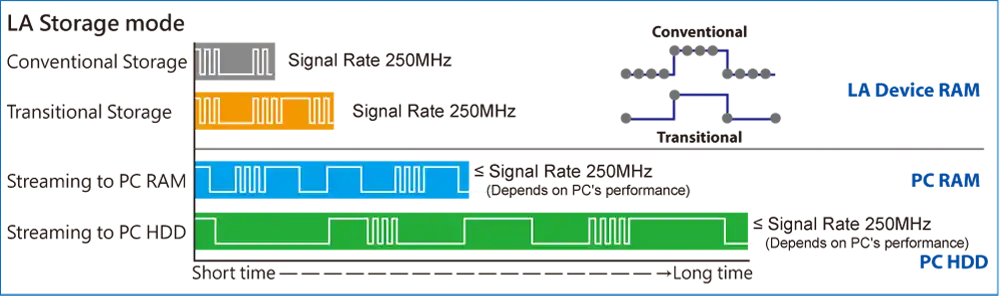
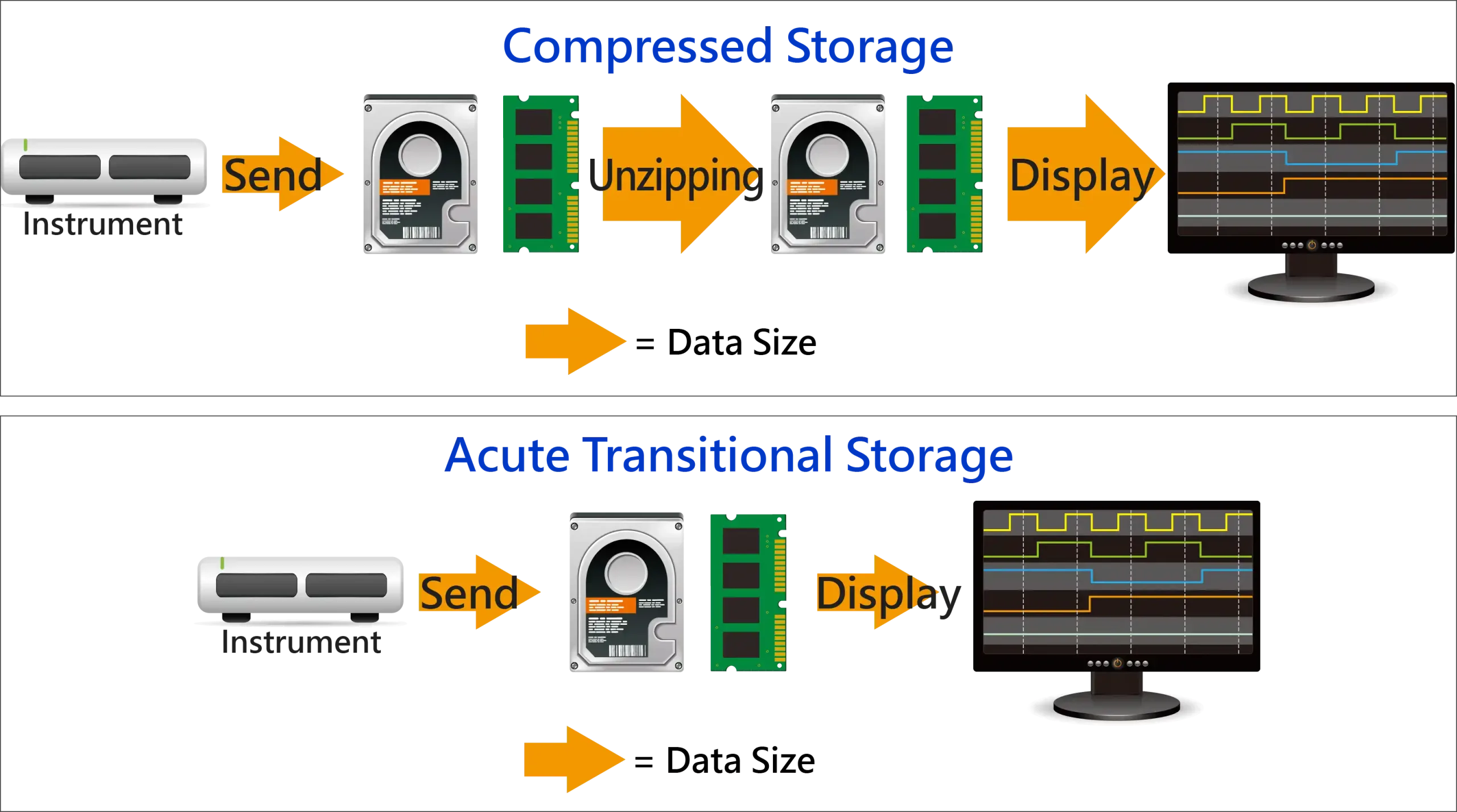
Long Time Record: Transitional Storage VS Compressed Storage
For signal capture and analysis, usually require to record the signal for a long time. If the data is stored in a compressed way, it will cause your software to lag or even stop functioning when decompressing the data after it is sent back to the computer. Because PC memory size might insufficient for decompressed data size. To satisfy the requirement of smooth software operation and long-term recording without missing any data, the storage method adopted by the Acute analyzer is transitional storage rather than compression. After returning to the PC software, it doesn”t need to do the decompression. The decoded results can be displayed while the analysis is finished.
Analog waveform
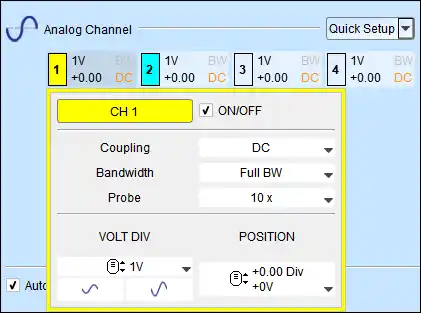
Input Sensitivity: 2mV/div to 10V/div; Max. Sampling Rate: 1GS/s @ 1Ch
Can be used with High Voltage probe, Differential probe or Current probe.
Digital waveform
Operation Range: ±30V
Max. Timing Analysis: 2GS/s @ 8Ch
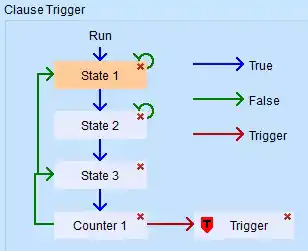
Flow chart bus triggers
Power trigger for serial bus, 8-states flow chart setting with Counter/Timer
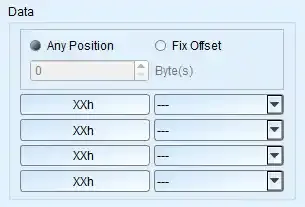
Detail parameters for each states
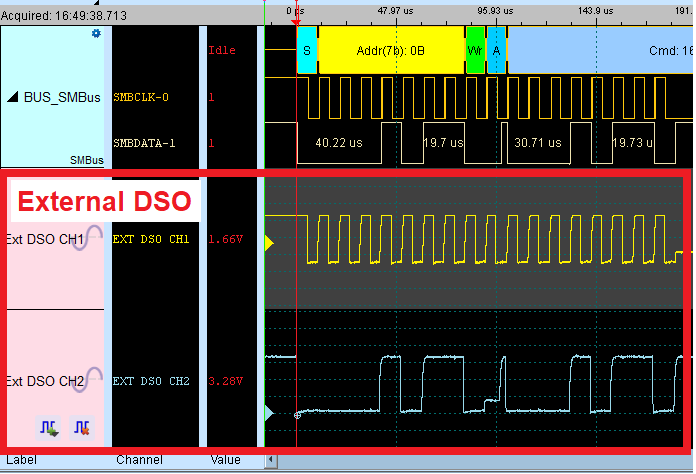
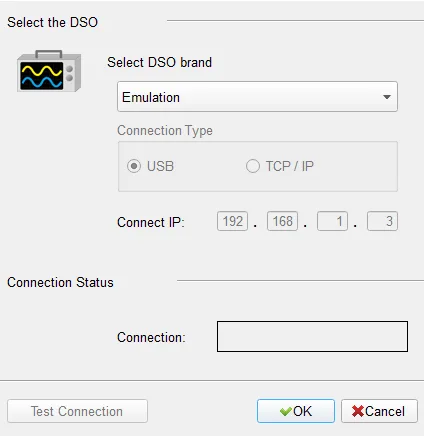
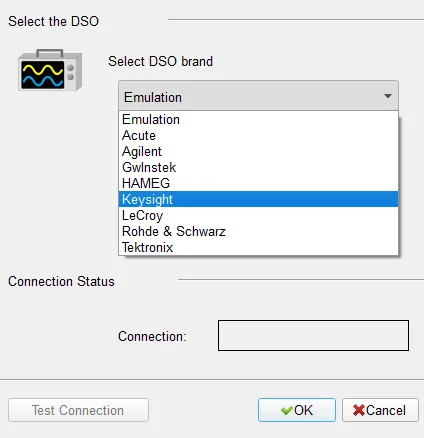
Stack With Other Vendors of Oscilloscope
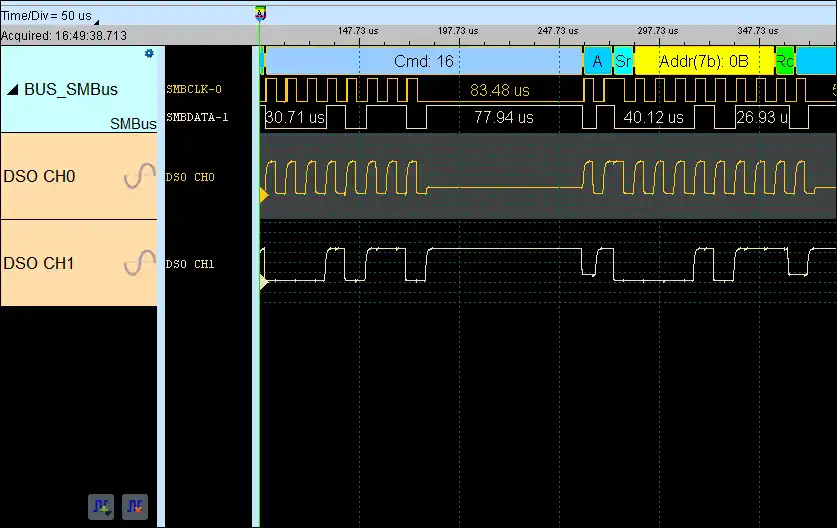
MSO Enables Digital & Analog Channels
(Using the same channels)a
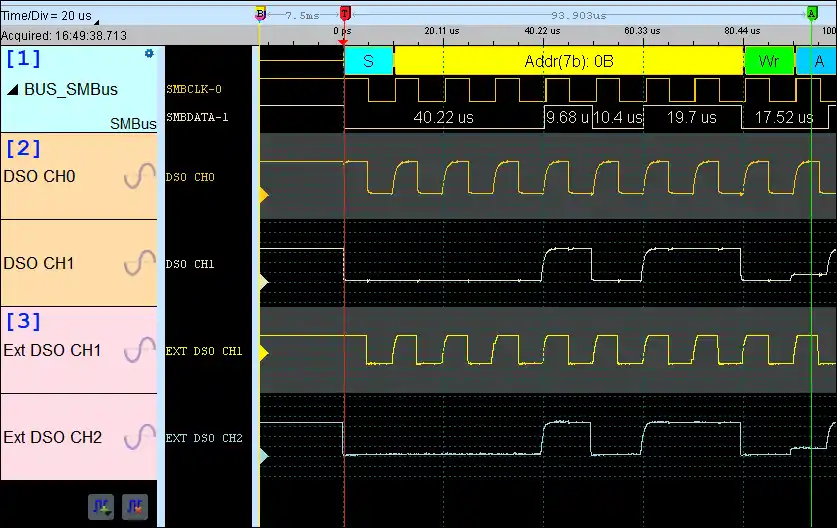
Digital & Analog Signals From MSO and External DSO From Other Vendors
*[1]: Decode & Digital Signals;*[2]: MSO Analog Signals;*[3]: External DSO Signals
Protocol Analyzer (PA) Mode
It is hardware decoding, may log protocol data very long time if without waveforms. Application timing: Preliminary protocol debug.
Protocol Analyzer
Show real-time protocol data. Application timing: massive protocol data with some idles in between.
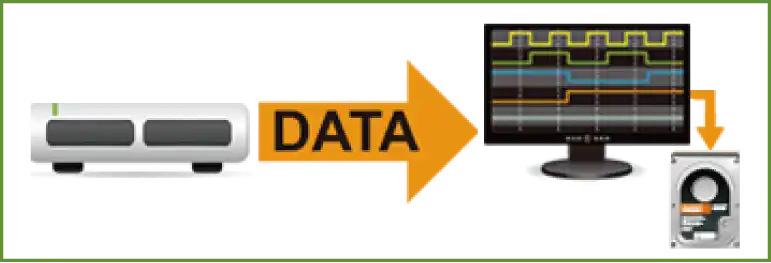
Protocol Logger
Like data logger, save massive data into SSD hard drive. Application timing: massive protocol data.
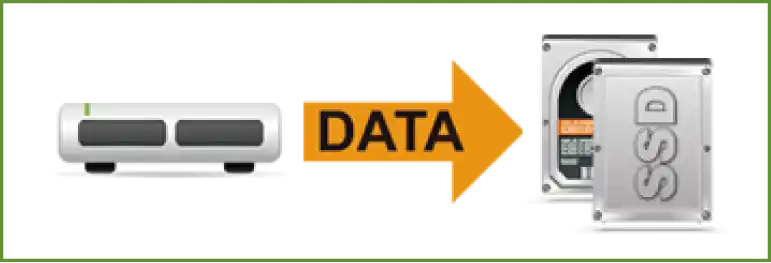
Protocol Monitor
Like dash cameras, record protocol data by the device’s memory only. Application timing: trigger event only happens in very long time.

| DSO Spec. | |
|---|---|
| Power source | USB bus-power (+5V) |
| Static power consumption | 4.5W |
| Max power consumption | 7.7W |
| Acquisition Mode | Sample, Average, Envelope[*], Peak detect[*], High resolution |
| 8 bits Sampling [Record length] | 1 Ch @ 1 GS/s [512 Mpts]; 2 Ch @ 500 MS/s [256 Mpts]; 4 Ch @ 250 MS/s [128 Mpts] |
| ≧12 bits Sampling [Record length] | 1 Ch @ 500 MS/s [512 Mpts]; 2 Ch @ 250 MS/s [256 Mpts]; 4 Ch @ 125 MS/s [64 Mpts] |
| ≧14 bits Sampling [Record length] | 1 Ch @ 100 MS/s [256 Mpts]; 2 Ch @ 100 MS/s [128 Mpts]; 4 Ch @ 100 MS/s [64 Mpts] |
| Input channels | 4 |
| Input coupling | AC/DC |
| Input impedance | 1 MΩ ∥ <19 pF |
| Overvoltage protection | ± 100 V (DC+AC peak) |
| Ch-Ch isolation | 50dB @ DC to 100MHz; 40dB @ 100MHz to 200MHz |
| Ch-Ch skew | 100 ps between two channels with the same scale & coupling settings |
| Bandwidth | 200 MHz |
| Rise time | 1.75 ns @ 200 MHz; 3.5 ns @ 100 MHz; 7 ns @ 50 MHz |
| Resolution | 8, 12, 14, 15, 16 bits |
| Input sensitivity | 2 mV/div to 10 V/div |
| Offset range | ±150 V @ 2, 5, 10 V/div; ±15 V @ 0.2, 0.5, 1 V/div; ±1.5 V @ 2, 5, 10, 20, 50, 100 mV/div |
| DC accuracy | ±3% of Full-Scale |
| Bandwidth limit | 20 MHz, 100 MHz or Full |
| Protocol Trigger / Decode | BiSS-C, CAN 2.0B/CAN FD, DALI, DP_Aux, HID over I2C, I2C, I2S, LIN2.2, MDIO, Mini/Micro LED, MIPI I3C 1.1, MIPI RFFE 3, MIPI SPMI 2, Modbus, PMBus, ProfiBus, SENT, SMBus, SPI, SVI2, UART, USB PD 3, USB1.1 |
| Electrical Validation (Protocol) | I2C, I2S, MIPI I3C, MIPI RFFE, MIPI SPMI, PDM, SPI, UART(RS232) |
| Cascade | 16 Ch |
| LA Spec. | |
| Power Source | N/A |
| Static Power Consumption | N/A |
| Max Power Consumption | N/A |
| Hardware Interface | N/A |
| Timing Analysis (Asynchronous,Max. Sample Rate) | 2 GS/s |
| State Clock Rate (Synchronous,External Clock) | 250 MHz |
| Storage | Conventional Timing, Transitional Timing |
| Channels | 16 |
| Total Memory | N/A |
| Timing Analysis | Available Chs (Conventional / Transitional Timing) – Memory per Ch |
| 4GHz Timing [Available Chs] – Memory per Ch | N/A |
| 2GHz Timing [Available Chs] – Memory per Ch | [8/7] – 512 Mpts |
| 1GHz Timing [Available Chs] – Memory per Ch | [16/14] – 256 Mpts |
| 500MHz Timing [Available Chs] – Memory per Ch | [16/16] – 256 Mpts |
| 250MHz Timing [Available Chs] – Memory per Ch | [16/16] – 256 Mpts |
| Channel to channel skew | < 1ns |
| Input channels | 16 |
| Input impedance | 75KΩ ∥ <2pF |
| Max. (Non-destructive) | ±50V |
| Input operation | ±30V |
| Input sensitivity | 0.25Vpp @50MHz, 0.5Vpp @150MHz, 0.8Vpp @250MHz |
| Threshold group | 2 (D0~D7, D8~D15 & CK0) |
| Threshold range | ±30V |
| Threshold resolution | 50mV |
| Threshold accuracy | ±100mV + 5%*Vth |
| Trigger resolution | 500ps |
| Trigger types | External, Manual, Multi Level, Setup/Hold Violation, Single Level, Timeout, Width |
| Protocol Trigger | BiSS-C, CAN2.0B/CAN FD, DALI, DP_Aux, eMMC 4.5, eSPI, HID over I2C, I2C, I2S, LIN2.2, LPC, MDIO, MII, Mini/Micro LED, MIPI I3C 1.1, MIPI RFFE 3, MIPI SPMI 2, Modbus, PMBus, Profibus, RGMII, RMII, SD 3.0 (SDIO 2.0), SENT, Serial Flash (SPI NAND), SMBus, SPI, SVI2, SVI3, SVID, UART, USB PD 3.1, USB1.1 |
| Protocol Analyzer | BiSS-C, CAN2.0B/CAN FD, DALI, DP_Aux, eSPI, HID over I2C, I2C, I2S, LIN2.2, MDIO, MII, MIPI I3C 1.1, MIPI RFFE 3, Modbus, PMBus, Profibus, PWM, RGMII, RMII, SMBus, SPI, SVI3, SVID, UART, USB PD 3.1, USB1.1 |